W@ssup
Kenyan Passport Ranked 66Th Globally As Africa Tops Eu Visa Rejections
Thorn Mulli
Courtesy
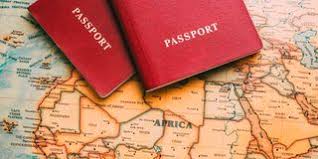
Kenya has been ranked 66th globally in the latest Henley Passport Index, a notable improvement from its previous position of 74th on the Guide Passport Index. The Kenyan passport provides visa-free access to 72 destinations, including Malaysia, Senegal, Singapore, and Indonesia, giving it an overall medium-low mobility score. However, Kenyan nationals still require a visa to enter about 157 destinations, including the United States, the European Union, the United Kingdom, and Japan.
Africa Tops EU Visa Rejection Rates
The Henley Openness Index reveals that Africa leads in EU visa rejections. Approximately 30% of African Schengen visa applicants were rejected, compared to 10% worldwide, despite Africa having the lowest number of visa applications per capita. Seven of the top ten countries with the highest Schengen visa rejection rates in 2022 were African: Algeria (45.8%), Guinea-Bissau (45.2%), Nigeria (45.1%), Ghana (43.6%), Senegal (41.6%), Guinea (40.6%), and Mali (39.9%).
Applicants from the US, Canada, and the UK faced much lower rejection rates (1 in 25), while Russians faced a 1 in 10 rejection rate. Algerians had a rejection rate 10 times higher than Canadians, Ghanaians were four times more likely to be rejected than Russians, and Nigerians faced a rejection rate nearly three times higher than Turkish applicants (15.5%) and twice that of Iranians (23.7%).
Bias Against African Applicants
Analysts argue that the European visa system shows a clear bias against African applicants, despite justifications based on security or economic concerns. Factors such as per capita income, illegal overstays, and low rates of return and readmission partially explain the high rejection rates. However, these reasons do not fully account for the significantly greater restrictions on African Schengen visa applicants. European migration policies, influenced by national identity politics, likely play a more substantial role.
Impact on African Mobility
Africans face a triple challenge: reduced passport influence, increased visa denial rates, and restricted economic movement. Struggling economies and biased regulations rooted in identity and cultural factors contribute to high rejection rates for African Schengen visa seekers.
Henley Openness Index Insights
The Henley Openness Index, evaluating 199 countries based on the number of nationalities they allow entry without a visa beforehand, reveals a correlation between a country’s receptiveness to foreigners and its citizens’ travel freedom. The Top 20 'most open' countries mainly consist of small island nations or African states, except Cambodia. Thirteen countries offer visa-free or visa-on-arrival entry to all 198 passports globally, including Kenya.
At the bottom, Afghanistan, North Korea, and Turkmenistan score zero, allowing no visa-free access for any passport. The Top 5 countries with the largest negative difference between their visa-free access and openness to other nations are Somalia, Sri Lanka, Djibouti, Burundi, and Nepal, while the Top 5 with the least difference are Singapore, Bahamas, Malaysia, Hong Kong (SAR China), and Barbados.


Global Visa Policy Trends
Singapore
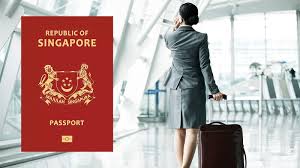
ranks at the top for its high level of openness, offering visa-free
entry to 164 nationalities out of 199. In contrast, France, Germany,
Italy, and Spain are lower at 49th place, with only 93 countries granted
visa-free access, while Japan ranks 65th with visa-free entry to just
70 nations.
US
citizens can visit 186 destinations without a visa, but the US only
allows 45 nationalities visa-free entry, ranking 78th on the Henley
Openness Index. This disparity in access and openness is the second
largest, just behind Australia.
Stricter Immigration Policies in Europe
Mainstream
political parties across Europe are adopting stricter immigration and
asylum policies. The Netherlands, for example, is implementing more
stringent regulations than the Schengen area. Recently, Ireland revoked
visa-free travel for South African and Botswana citizens, prompting
governments in the global south to advocate for visa reciprocity.
African Nations Push for Visa Reciprocity
In
May, Namibia announced plans to implement entry visa requirements for
over 30 countries that have not reciprocated its open visa policy.
Nigeria also plans to enforce similar measures against nations with
stringent visa regulations for Nigerian passport holders. This adds
complexity to the power dynamics in Africa involving China, the USA, and
Russia. While Russia and China ease visa restrictions, EU members
tighten visa-free access. The push for visa reciprocity is part of a
broader trend where developing countries challenge policies based on
colonial perceptions.
Conclusion
Africans
are confronted with reduced passport influence, increased visa denial
rates, and restricted economic movement. Struggling economies and biased
regulations contribute to high rejection rates for African Schengen
visa seekers. The Henley Openness Index highlights the need for more
equitable visa policies to promote global mobility and economic
opportunities.